YAMAMORI
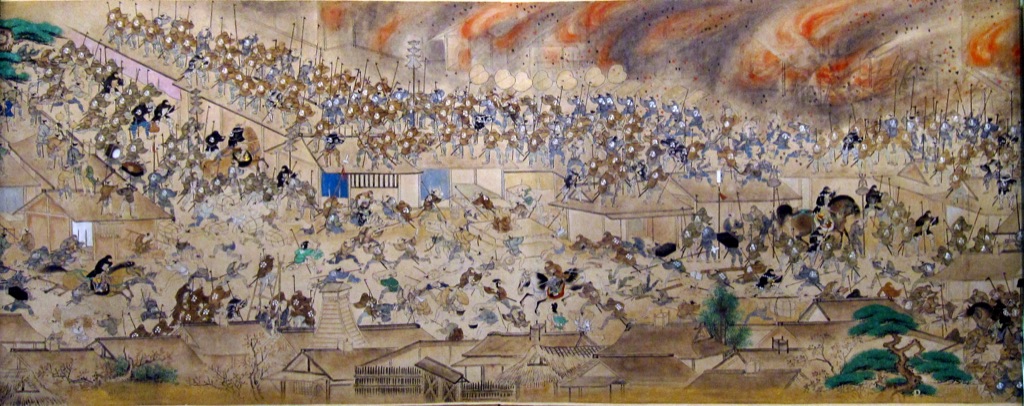


On 2 March 1657 a fire broke out at Honmyō-ji temple in Hongō and burned across Edo for three days. The keep of Edo Castle fell and sixty bridges collapsed; period death-toll estimates vary widely, with chronicles reporting figures in the tens of thousands in a city of about 300,000 (the often-quoted "100,000" is a high-end contemporary figure). Rebuilding would take an enormous amount of timber. But a century of over-logging for castles, farmland and firewood had already stripped Japan's slopes, and the mountains could no longer supply the sugi 杉, hinoki 檜 and matsu 松 the city needed.
- 1657–61 · daimyō residences, temples and shrines forcibly relocated to the city outskirts to thin the urban core.
- 1657 → · hirokōji firebreaks widened from cleared land; hiyokechi fire-exempt zones carved out.
- 1661 · the Ryōgoku Bridge opens the swampy east bank — Honjo, Fukagawa, the new merchant quarter.
- 1666 · the Yamakawa Okite — Mountains-and-Rivers Edict — numbers and records every tree on a protected slope.
- 1721 · the shogunate census puts Edo at 1.1 million, larger than London or Paris.
You are a yamamori (山守), a mountain-keeper posted to the Kiso valley above the Edo timber road. Your patrol covers one mountainside over 150 years, returning every fifty years for a single spring. When the forest does well, so does the city it supplies. It is the spring of 1657, and the Meireki fire is already burning. Each later spring brings a different threat. Your job stays the same: keep the standing trees alive, and plant the ones that will replace them.


Sources · 出典
• Totman, Conrad. The Green Archipelago: Forestry in Preindustrial Japan (UC Press, 1989).
• Miyazaki Antei. Nōgyō Zensho (農業全書, 1697), first Japanese silvicultural treatise.
• Moomaw, W. R. et al. (2019). "Intact Forests in the United States: Proforestation Mitigates Climate Change." Frontiers in Forests and Global Change, 2:27. doi.org/10.3389/ffgc.2019.00027
• Painting: anonymous Edo period scroll, The Great Fire of Meireki (held in Tokyo).
